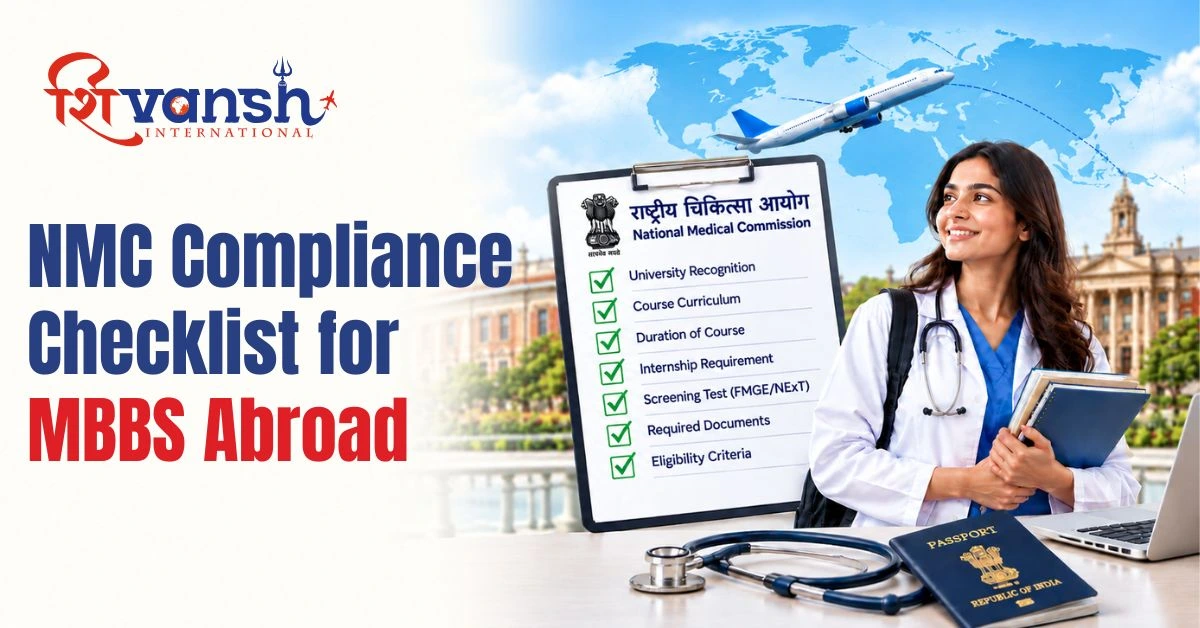

Choosing a foreign medical university requires more than comparing tuition fees, facilities, and admission requirements…

Choosing a medical university in another country is a significant decision for students and their families. Beyond tuition fees and admission offers, parents need to understand the university’s recognition, academic standards, clinical training, accommodation, and future licensing requirements. Asking the right questions before making a commitment helps families compare options carefully and avoid unexpected difficulties during the course.
Reliable MBBS Abroad guidance should provide clear, verifiable information rather than relying on promises or attractive brochures. Parents should also understand how the university and its support team will assist students throughout their education, from admission and visa documentation to settling in and preparing for future licensing requirements.
1. Is the Medical University Properly Recognised?
University recognition should be one of the first points parents investigate. A university’s international listing or promotional claims alone do not establish that its medical degree will meet every requirement for registration in India.
Before confirming admission, ask:
- Is the university legally authorised to offer the medical qualification in its country?
- Which national authority regulates medical education there?
- Is the university listed in the World Directory of Medical Schools (WDOMS)?
- Does the proposed programme meet the applicable National Medical Commission (NMC) requirements?
- Are graduates eligible to apply for medical registration or licensure in the country where they study?
For parents exploring MBBS Abroad, verifying these details helps them assess whether a university and its medical programme align with their child’s future career plans.
Request official documentation and verify information through the relevant regulatory authorities. Do not rely solely on claims such as “WHO-approved” or assume that a directory listing guarantees eligibility to practise in India.
2. Does the Course Meet NMC Requirements?
Course structure, duration, clinical training, and internship arrangements can affect a graduate’s eligibility for medical registration in India. Parents should confirm the current requirements that apply to their child before paying admission fees.
Ask the university and your counsellor about the total course duration, medium of instruction, clinical rotations, internship arrangements, and whether the student will be eligible for the relevant licensing process in the country of study.
For families considering Counselling for MBBS Abroad, these checks are essential because the details of the actual programme matter more than general assurances about a university or destination. Request written confirmation wherever possible and independently verify the applicable NMC regulations.
3. What Is the Total Cost of Studying Medicine Abroad?
The advertised tuition fee may not represent the full cost of medical education. Parents should prepare a complete budget covering the entire programme, including recurring and one-time expenses.
Ask for a written breakdown of:
- Annual tuition and university registration fees
- Hostel accommodation and food
- Health insurance, visa fees, and renewals
- Laboratory, examination, and repeat-subject charges
- Books, equipment, local transport, and personal expenses
- International travel and emergency funds
For families considering MBBS Abroad, understanding the complete financial commitment helps them compare universities realistically and plan for expenses throughout the course.
Also clarify the payment schedule, currency used, annual fee increases, refund policy, and consequences of withdrawing from the programme. Compare the estimated total cost across universities rather than selecting one based only on its initial fee.
4. How Safe Are the Campus and Accommodation?
Student safety deserves the same attention as academic quality. Parents should investigate the specific campus and accommodation arrangements instead of relying on broad statements about a country being safe.
Important questions include:
- Is the hostel university-owned, university-managed, or privately operated?
- What is the exact accommodation address, and how many students share a room?
- Are security staff, CCTV, access controls, and emergency contacts available?
- What arrangements exist for food, heating, transport, and medical emergencies?
- Is there a clear process for reporting harassment, ragging, or other safety concerns?
For families considering MBBS Abroad, checking campus security, hostel facilities, and local support services can help them assess whether the living environment is suitable for their child.
Where possible, request recent photographs or a live virtual tour. Speaking directly with current Indian students and their families can also provide useful perspectives on everyday campus life.
5. What Clinical Training and Hospital Exposure Will Students Receive?
Medical education requires meaningful supervised clinical experience, not just classroom instruction. Parents should understand where students will complete their clinical rotations and how patient exposure is organised.
Ask for the names and locations of affiliated teaching hospitals, the departments included in clinical training, the frequency of hospital visits, and the level of supervision provided. Clarify whether students maintain clinical logbooks and receive practical experience with patient assessment and case discussions.
Through Counselling for MBBS Abroad, parents can discuss these clinical training requirements and evaluate whether the proposed programme offers suitable practical learning opportunities.
Also ask whether students need to learn the local language to communicate with patients during clinical placements. These details help families assess whether the programme offers a suitable learning environment.
6. What Happens If a Student Fails an Examination?
Academic challenges can occur during a demanding medical programme. Parents should understand the university’s policies before admission rather than discovering them after a failed examination.
Confirm the number of permitted attempts, supplementary examination schedules, repeat-subject fees, and whether a failed subject can delay progression to the next academic year. Ask whether remedial classes or academic counselling are available and whether repeating a year could affect the student’s visa or accommodation.
Through Counselling for MBBS Abroad, parents can clarify these academic policies in advance and understand the support available if a student experiences difficulties during the course.
A transparent university should be able to explain its academic rules and provide the relevant policy documents.
Planning the next step towards medical education abroad? Contact Us to discuss your requirements and get guidance on evaluating suitable universities.
7. What Support Is Available Before and After Arrival?
Admission is only one stage of the student’s journey. Families should establish exactly which services are included in the counselling package and which require additional payment.
Ask whether support covers:
- University applications and document preparation
- Visa application guidance and pre-departure preparation
- Airport pickup and accommodation arrangements
- Local registration and enrolment procedures
- Emergency contacts and coordination with the university
- Ongoing academic or administrative assistance
For families planning MBBS Abroad, understanding the support available before departure and after arrival helps parents prepare for the transition and know whom to contact if challenges arise.
Parents should also ask whether a local coordinator is available in the destination country and how the family can contact them in an emergency. Get a written list of services, fees, and responsibilities before signing an agreement.
8. What Should Be Confirmed in Writing Before Paying?
Before making a payment, parents should keep a copy of the admission offer, fee schedule, refund policy, course details, accommodation terms, and the written list of services promised by the university or consultancy.
For families considering MBBS Abroad, reviewing these documents carefully helps clarify financial commitments, admission conditions, and the responsibilities of the university or counselling provider before any payment is made.
Verify the official payment beneficiary and use authorised payment channels. Avoid rushing into a decision because of claims of limited seats, guaranteed admission, or guaranteed licensing outcomes.
A careful review of these documents, combined with independent university verification, can help families make a more informed decision.
How Can Shivansh International Help?
Shivansh International assists students and families with university selection, admission procedures, documentation, visa guidance, and related support for studying medicine abroad. Through Counselling for MBBS Abroad, parents can discuss their child’s academic background, preferred destinations, budget, and long-term career goals to explore suitable options and better understand the admission process.
Frequently Asked Questions
What should parents check before choosing an MBBS university abroad?
Parents should verify the university’s legal recognition, applicable NMC requirements, course duration, clinical training, internship arrangements, total expenses, student safety, and eligibility for medical license in the country of study.
Does a WDOMS listing guarantee that a degree will be accepted in India?
No. A WDOMS listing is a directory entry, not a guarantee of recognition or eligibility for medical registration in India. Students should verify the applicable NMC rules and other relevant requirements independently.
What costs should parents consider apart from tuition fees?
Additional expenses may include accommodation, food, insurance, visa renewals, travel, books, examination fees, local transport, and repeat-subject charges. Families should request a complete fee breakdown and plan for emergencies.
How can parents check whether a university provides adequate clinical exposure?
Ask for the names of affiliated hospitals, clinical rotation schedules, supervision arrangements, practical training details, and information about patient interaction. Verify the information directly with the university where possible.
Why is counselling important when selecting a medical university abroad?
Professional counselling can help families compare universities, understand admission procedures, organise documentation, and review important academic and practical considerations. Parents should still independently verify regulatory requirements and obtain written confirmation of fees and services.
Conclusion
Selecting a medical university abroad requires careful evaluation of academic standards, regulatory requirements, finances, safety, and student support. Parents exploring MBBS Abroad should ask detailed questions and verify the answers before paying fees to make better-informed decisions for their child’s future. A transparent counselling process should help families understand both the opportunities and the responsibilities involved, without relying on unrealistic promises or guaranteed outcomes.
Explore Leading MBBS Abroad Consultancy
Related Posts