
Choosing the right country for Immigration in 2026 requires more than looking at a destination's…
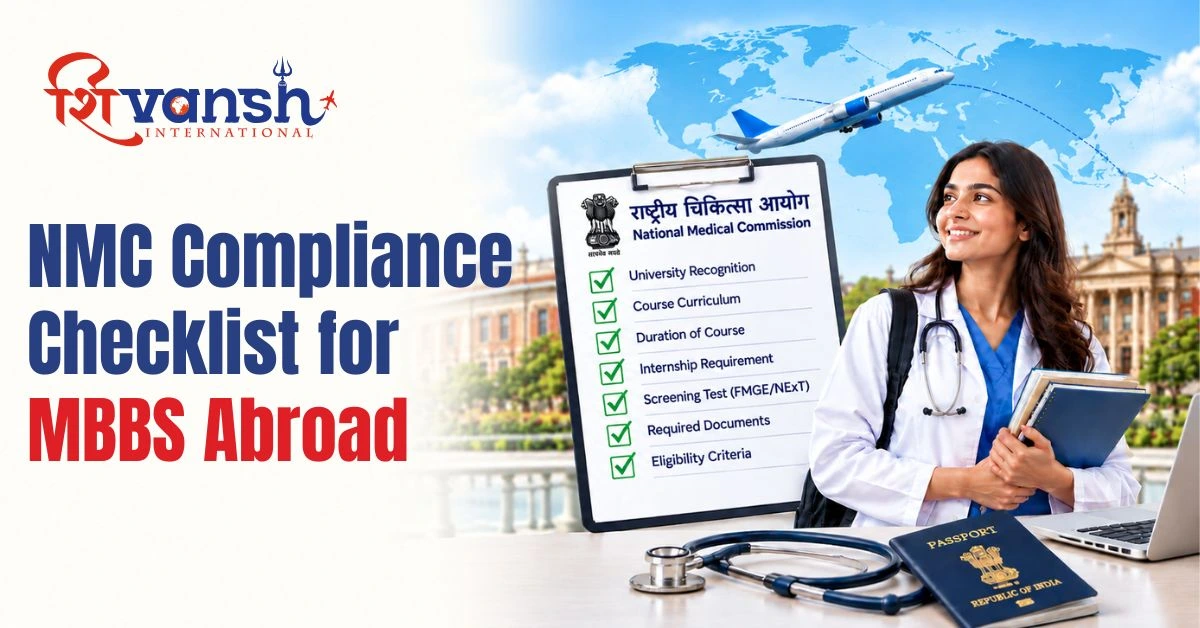
Choosing a foreign medical university requires more than comparing tuition fees, facilities, and admission requirements. For students planning MBBS Abroad, understanding the regulations governing their eligibility to practise medicine in India after graduation is equally important. Checking the applicable National Medical Commission (NMC) requirements is an essential step before selecting a university.
The Foreign Medical Graduate Licentiate (FMGL) Regulations, 2021, outline important requirements for foreign medical education and eligibility for medical registration in India. Students should verify the applicable rules and university-specific details before paying admission fees, because a university’s international listing alone does not guarantee that a qualification will meet every Indian registration requirement.
Why Is NMC Compliance Important for MBBS Abroad?
NMC compliance matters because completing a medical degree overseas does not automatically grant a graduate the right to practise in India. The qualification and training must meet the applicable regulatory requirements, and graduates must complete the prescribed licensing and registration process.
Students considering MBBS Abroad should review the course structure, clinical training, internship arrangements, medium of instruction, and eligibility for medical licensure in the country of study. These details should be confirmed through official university documents and the relevant regulatory authorities rather than relying only on verbal assurances from admission agents.
9 NMC Compliance Requirements to Check Before Admission
1. NEET Qualification
Indian students planning to pursue MBBS Abroad should verify their NEET-UG eligibility before admission. Keep the relevant NEET scorecard and confirm that you meet the applicable eligibility requirements for your admission year.
Do not rely on claims that NEET is unnecessary for Indian students seeking to qualify for medical registration in India. University admission requirements and Indian regulatory requirements are not necessarily the same.
2. Minimum Course Duration
The FMGL Regulations, 2021, specify a minimum duration of 54 months of medical education, subject to the applicable regulatory conditions. Students planning MBBS Abroad should obtain the official course structure and confirm the duration of the academic programme before enrolling.
Check whether the advertised duration includes preparatory courses, language classes, clinical rotations, or other components. Do not assume that the total time spent overseas automatically counts toward the required medical education period.
3. Mandatory Clinical Internship
Internship arrangements require particular attention for students pursuing MBBS Abroad. The supplied checklist identifies a 12-month clinical internship as a key requirement, with training completed in accordance with the applicable regulations.
Before admission, request written confirmation of the internship duration, location, supervision, clinical exposure, and how it fits into the university’s medical qualification. Also verify any applicable Indian compulsory rotating medical internship (CRMI) requirements with the relevant authority.
4. Single-Institution and Country Requirements
Students planning MBBS Abroad should carefully review where the medical course, clinical training, and internship will take place. The supplied checklist highlights continuity at the same foreign institution and within the same country as an important compliance consideration.
Ask the university whether any rotations, transfers, or split-campus arrangements are part of the programme. Get written clarification before enrolling, particularly if clinical training is delivered through partner hospitals or institutions in different locations.
5. English-Medium Instruction
Students planning MBBS Abroad should confirm the official medium of instruction for the complete programme, including lectures, practical sessions, examinations, and clinical training.
An advertisement stating that a course is taught in English may not fully explain how patient interactions or clinical assessments are conducted. Students should ask for an official medium-of-instruction confirmation and clarify whether local-language proficiency is needed during hospital training.
6. Eligibility for a Medical Licence in the Host Country
Students planning MBBS Abroad should ensure that their foreign medical qualification meets the applicable requirements for registration or eligibility to practise medicine in the country where they study.
Before selecting a university, identify the host country’s medical regulator and verify the degree’s status directly. Ask whether graduates are eligible for the relevant local licensing process and what additional examinations, internships, or registration conditions may apply.
7. Verification Through Official Medical School Directories
Students should verify the institution using reliable official sources before making payments.
- World Directory of Medical Schools (WDOMS): Search the institution through the official WDOMS website.
- Relevant medical regulator: Check the host country’s official medical regulatory body for recognition and licensing requirements.
- Indian regulatory information: Review the National Medical Commission website for applicable rules and official guidance.
A WDOMS listing is useful for identifying a medical school, but listing alone does not establish NMC compliance or guarantee eligibility to practise in India. Verify the specific qualification and its regulatory conditions separately.
Planning to study medicine overseas? Contact Us for guidance on university selection, admissions, documentation, and your MBBS Abroad journey.
8. Check Official Notices and Advisories
Before paying a deposit for MBBS Abroad, check whether official authorities have published relevant notices, warnings, or restrictions concerning the institution or qualification.
Review the NMC’s current guidance and contact the relevant regulator if the university’s status is unclear. You should also check the Indian Embassy’s official website in the host country for applicable advisories.
Do not rely solely on an agent’s statement that a university is “NMC approved.” Request verifiable evidence and confirm the current position through official sources.
9. Understand the Licensing Examination and Registration Process
Students completing MBBS Abroad must meet the applicable licensing and registration requirements before practising medicine in India. The relevant screening or licensing examination requirements depend on the regulations in force when the graduate applies.
Students should monitor official announcements concerning the Foreign Medical Graduate Examination (FMGE), the National Exit Test (NExT), and other applicable requirements. Do not assume that passing an examination alone resolves every eligibility issue; the qualification and training must also satisfy the relevant regulations.
NMC Compliance Checklist: Quick Reference
| Compliance component | What to verify before admission |
| NEET qualification | Applicable eligibility and valid supporting documents |
| Course duration | Official curriculum and required medical education period |
| Internship | Duration, location, supervision, and regulatory compliance |
| Institution and country | Course and clinical training arrangements |
| Medium of instruction | Official confirmation of teaching and examination language |
| Local licensing | Eligibility under the host country’s medical regulations |
| Directory verification | WDOMS listing and checks with relevant regulators |
| Official advisories | Current notices and warnings from relevant authorities |
| Indian licensing | Applicable examination and registration requirements |
Documents to Request Before Paying University Fees
Before finalising admission for MBBS Abroad, maintain a written record of the university’s responses and request the following documents wherever applicable:
- Official admission offer and course curriculum
- Year-wise programme duration and academic schedule
- Written internship policy and clinical training details
- Medium-of-instruction confirmation
- Information on local medical licensing eligibility
- Official institutional and regulatory verification details
- Fee structure, refund policy, and other admission terms
Keeping these documents helps you compare universities on more than price and marketing claims. If information is incomplete or contradictory, clarify it with the university and relevant authorities before making a financial commitment.
How Shivansh International Can Help with MBBS Abroad Planning?
Selecting a foreign medical university involves academic, financial, admission, and documentation decisions. Shivansh International supports students with university selection, admission assistance, documentation preparation, application guidance, and student visa support.
When exploring MBBS Abroad, students should discuss their academic profile, NEET eligibility, preferred destination, and long-term plans during counselling. University-specific compliance questions should be checked against official regulatory sources before admission is finalised.
Frequently Asked Questions
Is NEET qualification necessary for Indian students pursuing MBBS abroad?
Indian students should verify the applicable NEET-UG eligibility requirements before enrolling in a foreign medical programme. The requirements for admission to a foreign university and eligibility for registration in India may differ.
Does a WDOMS-listed university guarantee that I can practise in India?
No. A WDOMS listing does not by itself guarantee compliance with NMC requirements or eligibility for Indian medical registration. Students must verify the qualification, course structure, training, and other applicable conditions.
Why should I check the internship before admission?
The internship is an important part of medical training and may be subject to specific duration, location, and regulatory requirements. Obtain written details from the university and confirm that the arrangements meet the applicable rules.
Can I transfer to another university during my foreign medical course?
Do not assume that a transfer will be accepted for Indian registration purposes. Before changing institutions or countries, verify the applicable FMGL requirements and obtain clarification from the relevant authorities.
Can I practise in India immediately after completing MBBS abroad?
Not automatically. Graduates must satisfy the applicable qualification, licensing examination, internship, and registration requirements before they can practise medicine in India.
Conclusion
An NMC compliance check should be part of university selection, not something students investigate after graduation. Before committing to MBBS Abroad, verify NEET eligibility, course duration, clinical training, internship arrangements, medium of instruction, local licensing eligibility, and the applicable Indian registration requirements.
Use official documentation and current regulatory guidance to assess each university individually. Careful verification before admission can help students make informed decisions and reduce the risk of choosing a programme that does not meet their future professional requirements.
Explore Leading MBBS Abroad Consultancy
Related Posts