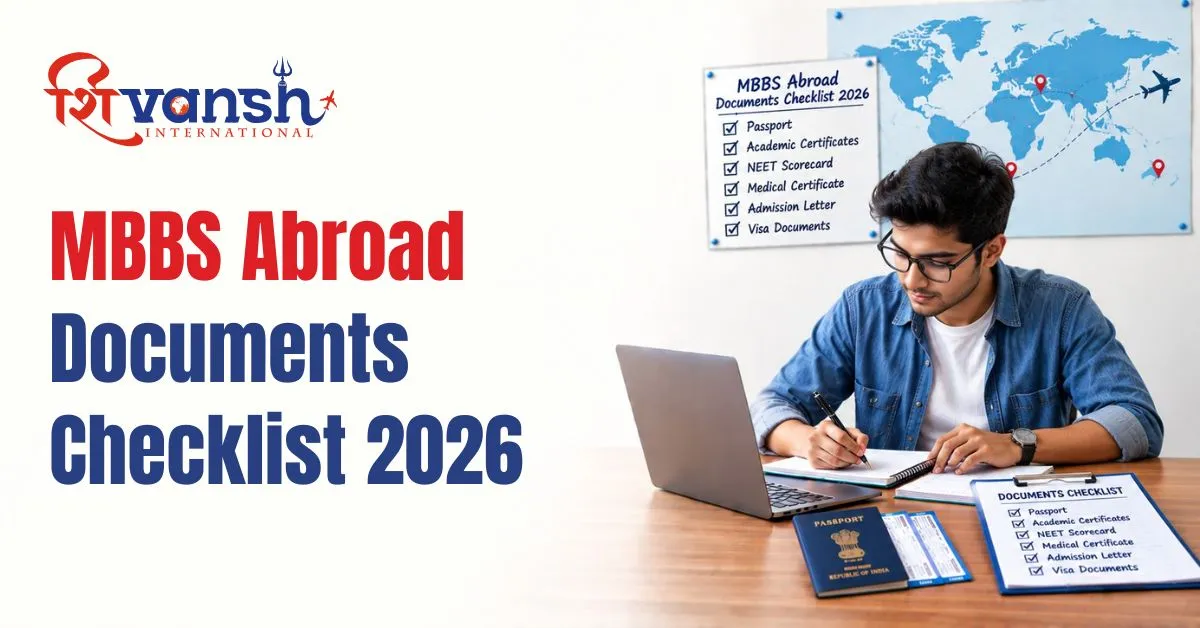

Planning to study medicine overseas requires more than selecting a university and completing an application…

Studying abroad can provide international students with opportunities to build academic qualifications, gain professional experience, and explore long-term residence options. However, completing a course does not automatically result in permanent residency. The applicable pathway depends on the destination country, qualification, employment, immigration category, and requirements in force when the student applies.
For students considering Study Abroad PR, planning should begin before selecting a course. Understanding post-study work options, employment requirements, documentation, and available residence categories can help students make more informed decisions about their international education journey.
How Does the Study-to-PR Journey Work?
A Study Abroad PR journey generally involves several stages:
- Choose a suitable study program based on academic and career goals.
- Complete the qualification while following student-visa conditions.
- Explore post-study work opportunities available to eligible graduates.
- Gain relevant employment or experience, where required by the immigration pathway.
- Meet the applicable eligibility conditions for permanent residence.
- Submit the PR application with the required documentation.
The exact process varies between countries, and students should verify current requirements with the relevant immigration authority.
Canada
Canada is one of the destinations covered by Shivansh International for permanent residence services. The supplied 2026 information describes a pathway that can involve study → Post-Graduation Work Permit (PGWP) → skilled work experience → Express Entry or Provincial Nominee Program (PNP).
Students considering Canada should check whether their selected institution and program qualify for the relevant post-study work option. The supplied information also highlights changes affecting some non-degree programs and fields of study.
For students planning Study Abroad PR, understanding the connection between the selected qualification, post-study work eligibility, and potential immigration pathway is important before admission.
Germany
Germany is among the countries covered by Shivansh International for permanent residence services. For eligible international graduates, the supplied information describes a pathway that can begin with studying in Germany and continue with an 18-month post-study job-search period, providing an opportunity to seek suitable employment.
After securing relevant employment, graduates may explore skilled employment or an EU Blue Card route, depending on their individual circumstances and the applicable residence category. Permanent residence eligibility can vary based on factors such as the residence permit, employment, qualifications, and other immigration requirements.
For students considering Study Abroad PR, evaluating both the chosen academic program and potential employment opportunities can help with longer-term planning. Current requirements should always be confirmed with the relevant German immigration authorities before making decisions.
Australia
Australia is among the countries covered by Shivansh International for permanent residence services. The supplied information describes a potential pathway from studying in Australia to the Temporary Graduate visa (Subclass 485) and then toward relevant skilled migration options.
The pathways mentioned in the supplied material include Subclass 189, Subclass 190, and Subclass 491. Eligibility can depend on factors such as the applicant’s occupation, skills, points, and applicable state or regional requirements.
For students considering Study Abroad PR, it is important to evaluate the relationship between the chosen qualification, occupation, post-study work options, and potential skilled migration pathways. Completing an Australian course alone does not guarantee permanent residency, so students should verify the current requirements applicable to their circumstances before making decisions.
UK, USA and France
The Shivansh International PR service page includes the UK, USA, and France among the destinations served for permanent residence. For students considering Study Abroad PR in these countries, the relevant post-study work, employment, residence, and permanent residency requirements should be reviewed before selecting a course.
The supplied source material does not provide specific 2026 study-to-PR pathways for the UK, USA, or France. Therefore, students should not assume that completing a particular course automatically creates a PR route. The applicable pathway can depend on the destination, immigration category, qualification, employment, and individual eligibility.
The same consideration applies to New Zealand, Singapore, UAE, Qatar, and Saudi Arabia, which are also listed among the countries served by Shivansh International. Since their immigration frameworks and residence categories differ, students should evaluate the requirements specific to their chosen destination rather than following a single study-to-PR formula.
Planning your study-to-PR journey? Contact Us today for guidance on study abroad options, post-study pathways, and permanent residence requirements.
Documents and Planning for PR
Permanent residence applications can require documentation related to identity, residence, employment, education, finances, and family circumstances. The Shivansh International source specifically mentions documents such as a valid passport, proof of residency, employment or financial evidence, relationship documents where applicable, and completed visa forms.
Students planning Study Abroad PR should maintain their academic records, employment documents, immigration history, and other relevant paperwork throughout their international journey.
Why Plan the PR Pathway Before Studying?
Choosing a study destination only on the basis of university reputation or course availability may overlook important long-term considerations. For students planning Study Abroad PR, understanding the potential relationship between education, employment, and permanent residence can help with better long-term planning.
Before selecting a destination and course, students should examine:
- Post-study work opportunities
- Relevant employment options
- Residence and PR categories
- Qualification requirements
- Language requirements
- Work-experience conditions
- Financial and documentation requirements
- Country-specific immigration rules
This approach allows students to consider education and long-term career planning together.
Frequently Asked Question
Does studying abroad guarantee PR?
No. Completing an overseas qualification does not automatically guarantee permanent residency. Applicants must meet the requirements of the relevant immigration pathway.
Which countries does Shivansh International serve for PR?
The supplied Shivansh International source lists the USA, Canada, UK, Germany, France, Australia, New Zealand, Singapore, UAE, Qatar, and Saudi Arabia.
Can students work after completing their studies?
Post-study work opportunities depend on the destination country, qualification, visa category, and applicable immigration rules.
Should PR options be considered before choosing a course?
Yes. Students can consider the relationship between their chosen qualification, future employment opportunities, post-study options, and applicable residence pathways before making an education decision.
Is the study-to-PR process the same in every country?
No. Each country has its own immigration categories, eligibility requirements, documentation, and residence conditions. Students should verify the applicable rules for their destination.
Conclusion
A study-to-PR journey requires planning beyond university admission. Study Abroad PR options can differ considerably across Canada, Germany, Australia, the UK, USA, France, New Zealand, Singapore, UAE, Qatar, and Saudi Arabia, which are among the destinations covered by Shivansh International’s permanent residence services. Students should evaluate their education plans alongside post-study employment and applicable residence requirements. Most importantly, current immigration rules should be confirmed through the relevant government authorities before making an application or long-term decision.
Explore Leading MBBS Abroad Consultancy
Related Posts